Buy no1.be ?
We are moving the project
no1.be .
Are you interested in purchasing the domain
no1.be ?
domain@kv-gmbh.de · 0541-91531010
Buy no1.be ?
What is first-order partial differentiation?
First-order partial differentiation is a mathematical concept used to find the rate of change of a function with respect to one of its independent variables, while holding the other variables constant. It involves taking the derivative of a function with respect to one variable, treating the other variables as constants. This allows us to understand how the function changes with respect to each individual variable, providing valuable information for optimization and understanding the behavior of the function in different directions. First-order partial differentiation is a fundamental tool in calculus and is widely used in fields such as physics, engineering, and economics. **
What are partial currents and partial voltages?
Partial currents and partial voltages refer to the individual contributions of different components in an electrical circuit. In a complex circuit, there may be multiple sources of current and voltage, and partial currents and partial voltages help to analyze the behavior of each component separately. By breaking down the total current and voltage into their partial components, it becomes easier to understand the interactions and effects of individual elements within the circuit. This analysis is crucial for designing and troubleshooting electrical systems. **


Similar search terms for Partial
Top-Angebote
Products related to Partial:
-
PUMA Pantalon PrimeDétails produit • Taille standard • Taille élastiquée • Bandes côtés • Bord côtes chevilles Composition et Entretien • 67% polyester, 33% coton • Pour l'entretien, merci de vous référer aux indications figurant sur l'étiquette du produit45,50 €*Shipping: 3,99 €Secure redirect to the provider
-
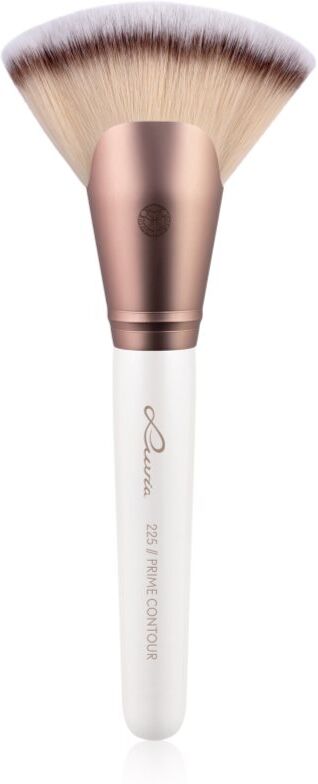
Luvia Cosmetics Prime Countour Prime Contour pinceau contouring 1 pcsLuvia Cosmetics Prime Countour Prime Contour, 1 pcs, Pinceaux visage pour femme, Les « make-up artists » n’utilisent que des pinceaux de qualité. Inspirez-vous donc de leur expertise et faites comme eux. Le pinceau Luvia Cosmetics Prime Countour Prime Contour élèvera votre make-up du visage à un niveau supérieur et vous permettra de créer un look digne d’un professionnel. Grâce à ce pinceau, vous appliquerez les produits de maquillage sur votre peau avec une légèreté et une précision que vous auriez du mal à atteindre avec vos doigts. Ce pinceau vous garantit un maquillage parfait du visage, que ce soit à la maison ou en voyage. Le produit : poils fins application facile et précise pour l’application de produit en poudre produit végétalien parfaite tenue en main Mode d’emploi : Utilisez le pinceau pour appliquer sur le contour du visage. Procédez en faisant de petits mouvements et étalez bien.10,62 €*Shipping: 3,45 €Secure redirect to the provider



-
How does partial square root extraction work through prime factorization?
Partial square root extraction through prime factorization involves breaking down the number into its prime factors and then extracting the square roots of the perfect squares formed by pairs of identical prime factors. For example, if we have the number 72, we can factorize it into 2^3 * 3^2. We can then extract the square root of 2^2 and 3^2, which gives us 2 * 3 = 6. This method allows us to simplify square roots of large numbers by breaking them down into smaller, more manageable parts. **
-
How does partial square root extraction through prime factorization work?
Partial square root extraction through prime factorization involves breaking down the number into its prime factors and then extracting the square roots of some of those factors. For example, if we have a number like 72, we can break it down into its prime factors (2^3 * 3^2) and then extract the square root of one of the factors (in this case, 2) to simplify the square root of the original number. This method helps in simplifying square roots of large numbers by reducing them to smaller, more manageable components. **
-
How do you calculate partial voltages and partial currents?
To calculate partial voltages and partial currents in a circuit, you can use Kirchhoff's laws. Kirchhoff's voltage law states that the sum of the voltages around any closed loop in a circuit is zero. By applying this law to different loops in the circuit, you can calculate the partial voltages across specific components. Similarly, Kirchhoff's current law states that the sum of currents entering a node is equal to the sum of currents leaving the node. By applying this law to different nodes in the circuit, you can calculate the partial currents flowing through specific branches. These calculations allow you to analyze the behavior of individual components within a larger circuit. **
-
How do you calculate partial currents and partial voltages?
To calculate partial currents and partial voltages in a circuit, you can use Kirchhoff's current law (KCL) and Kirchhoff's voltage law (KVL). KCL states that the sum of currents entering a node is equal to the sum of currents leaving the node. By applying KCL at a specific node, you can determine the partial currents flowing through different branches. Similarly, KVL states that the sum of voltage rises in a closed loop is equal to the sum of voltage drops. By applying KVL in a loop, you can determine the partial voltages across different components in the circuit. **


What are partial charges?
Partial charges are the charges that exist on atoms within a molecule due to differences in electronegativity. When atoms in a molecule have different electronegativities, they create an uneven distribution of electrons, resulting in partial positive and negative charges on the atoms. These partial charges play a crucial role in determining the overall polarity of a molecule and its interactions with other molecules. **
What are partial volumes?
Partial volumes refer to the amount of space occupied by a specific component within a mixture or solution. It represents the volume of a particular substance in relation to the total volume of the mixture. Partial volumes are important in understanding the behavior of mixtures, such as in the calculation of partial pressures in gas mixtures or in determining the concentration of a solute in a solution. **
Top-Angebote
Products related to Partial:
-
PUMA Bonnet Essentiel No1 Logo Cuffless JrDétails produit • Taille unique Composition et Entretien • Matière principale : 100% acrylique • Doublure : 100% acrylique • Pour l'entretien, merci de vous référer aux indications figurant sur l'étiquette du produit10,50 €*Shipping: 3,99 €Secure redirect to the provider
-
PUMA Veste PrimeDétails produit • Col montant • Manches longues • Fermeture zippée • Longueur : standard • Finitions bord côtes Composition et Entretien • 67% polyester, 33% coton • Pour l'entretien, merci de vous référer aux indications figurant sur l'étiquette du produit52,50 €*Shipping: 3,99 €Secure redirect to the provider
-
PUMA Pantalon PrimeDétails produit • Taille standard • Taille élastiquée • Bandes côtés • Bord côtes chevilles Composition et Entretien • 67% polyester, 33% coton • Pour l'entretien, merci de vous référer aux indications figurant sur l'étiquette du produit45,50 €*Shipping: 3,99 €Secure redirect to the provider
-
Luvia Cosmetics Prime Countour Prime Contour pinceau contouring 1 pcsLuvia Cosmetics Prime Countour Prime Contour, 1 pcs, Pinceaux visage pour femme, Les « make-up artists » n’utilisent que des pinceaux de qualité. Inspirez-vous donc de leur expertise et faites comme eux. Le pinceau Luvia Cosmetics Prime Countour Prime Contour élèvera votre make-up du visage à un niveau supérieur et vous permettra de créer un look digne d’un professionnel. Grâce à ce pinceau, vous appliquerez les produits de maquillage sur votre peau avec une légèreté et une précision que vous auriez du mal à atteindre avec vos doigts. Ce pinceau vous garantit un maquillage parfait du visage, que ce soit à la maison ou en voyage. Le produit : poils fins application facile et précise pour l’application de produit en poudre produit végétalien parfaite tenue en main Mode d’emploi : Utilisez le pinceau pour appliquer sur le contour du visage. Procédez en faisant de petits mouvements et étalez bien.10,62 €*Shipping: 3,45 €Secure redirect to the provider
-
What is first-order partial differentiation?
First-order partial differentiation is a mathematical concept used to find the rate of change of a function with respect to one of its independent variables, while holding the other variables constant. It involves taking the derivative of a function with respect to one variable, treating the other variables as constants. This allows us to understand how the function changes with respect to each individual variable, providing valuable information for optimization and understanding the behavior of the function in different directions. First-order partial differentiation is a fundamental tool in calculus and is widely used in fields such as physics, engineering, and economics. **
-
What are partial currents and partial voltages?
Partial currents and partial voltages refer to the individual contributions of different components in an electrical circuit. In a complex circuit, there may be multiple sources of current and voltage, and partial currents and partial voltages help to analyze the behavior of each component separately. By breaking down the total current and voltage into their partial components, it becomes easier to understand the interactions and effects of individual elements within the circuit. This analysis is crucial for designing and troubleshooting electrical systems. **
-
How does partial square root extraction work through prime factorization?
Partial square root extraction through prime factorization involves breaking down the number into its prime factors and then extracting the square roots of the perfect squares formed by pairs of identical prime factors. For example, if we have the number 72, we can factorize it into 2^3 * 3^2. We can then extract the square root of 2^2 and 3^2, which gives us 2 * 3 = 6. This method allows us to simplify square roots of large numbers by breaking them down into smaller, more manageable parts. **
-
How does partial square root extraction through prime factorization work?
Partial square root extraction through prime factorization involves breaking down the number into its prime factors and then extracting the square roots of some of those factors. For example, if we have a number like 72, we can break it down into its prime factors (2^3 * 3^2) and then extract the square root of one of the factors (in this case, 2) to simplify the square root of the original number. This method helps in simplifying square roots of large numbers by reducing them to smaller, more manageable components. **
Similar search terms for Partial
-
PUMA Veste col polo PRIMEDétails produit • Coupe oversize, ample • Longueur : court • Col polo, chemise • Convient à la pratique sportive Composition et Entretien • 100% polyester • Pour l'entretien, merci de vous référer aux indications figurant sur l'étiquette du produit140,00 €*Shipping: 3,99 €Secure redirect to the provider
-
PUMA Veste sans manches PRIMEDétails produit • Longueur : court • Col montant • Fermeture zippée • Sans manche • Poches côtés Composition et Entretien • 100% polyester • Pour l'entretien, merci de vous référer aux indications figurant sur l'étiquette du produit110,00 €*Shipping: 3,99 €Secure redirect to the provider
-
How do you calculate partial voltages and partial currents?
To calculate partial voltages and partial currents in a circuit, you can use Kirchhoff's laws. Kirchhoff's voltage law states that the sum of the voltages around any closed loop in a circuit is zero. By applying this law to different loops in the circuit, you can calculate the partial voltages across specific components. Similarly, Kirchhoff's current law states that the sum of currents entering a node is equal to the sum of currents leaving the node. By applying this law to different nodes in the circuit, you can calculate the partial currents flowing through specific branches. These calculations allow you to analyze the behavior of individual components within a larger circuit. **
-
How do you calculate partial currents and partial voltages?
To calculate partial currents and partial voltages in a circuit, you can use Kirchhoff's current law (KCL) and Kirchhoff's voltage law (KVL). KCL states that the sum of currents entering a node is equal to the sum of currents leaving the node. By applying KCL at a specific node, you can determine the partial currents flowing through different branches. Similarly, KVL states that the sum of voltage rises in a closed loop is equal to the sum of voltage drops. By applying KVL in a loop, you can determine the partial voltages across different components in the circuit. **
-
What are partial charges?
Partial charges are the charges that exist on atoms within a molecule due to differences in electronegativity. When atoms in a molecule have different electronegativities, they create an uneven distribution of electrons, resulting in partial positive and negative charges on the atoms. These partial charges play a crucial role in determining the overall polarity of a molecule and its interactions with other molecules. **
-
What are partial volumes?
Partial volumes refer to the amount of space occupied by a specific component within a mixture or solution. It represents the volume of a particular substance in relation to the total volume of the mixture. Partial volumes are important in understanding the behavior of mixtures, such as in the calculation of partial pressures in gas mixtures or in determining the concentration of a solute in a solution. **
* All prices are inclusive of VAT and, if applicable, plus shipping costs. The offer information is based on the details provided by the respective shop and is updated through automated processes. Real-time updates do not occur, so deviations can occur in individual cases. ** Note: Parts of this content were created by AI.